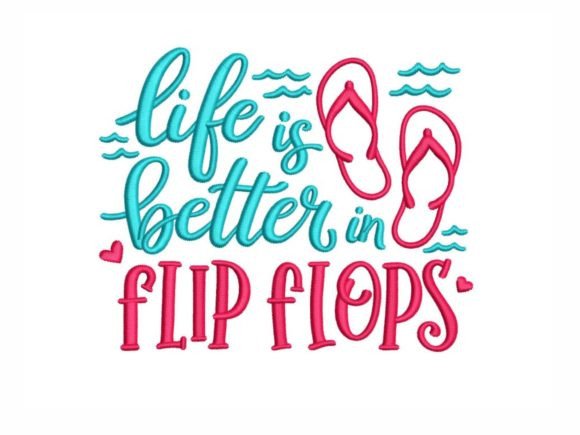
Life is Better in Flip Flops: A Designer’s Review
As an embroidery designer who has spent years digitizing and stitching thousands of designs, I have learned that the best motifs are not always the most complex. Sometimes, a simple, well-executed concept carries more weight than an intricate masterpiece. When I first loaded the Life is Better in Flip Flops machine embroidery design into my software, I was looking for clarity, balance, and versatility. This piece immediately struck me as a staple for any summer-themed collection, offering a relaxed vibe that translates beautifully from screen to fabric.
First Impressions and Visual Personality
The mood of this design is undeniably cheerful and laid-back. It captures the essence of coastal living without relying on clichés like anchors or seashells. The layout feels open and breathable, which is crucial for embroidery. Overly dense designs can pucker fabric and feel heavy on lightweight garments, but this motif maintains a light touch. The visual personality suggests leisure, warmth, and simplicity. For a craft business owner, this means the design appeals to a broad demographic, from teenagers looking for trendy tote bag designs to adults seeking nostalgic holiday embroidery for home decor.
What stands out initially is the potential for creative thread color choices. While traditional blues and sandy beiges work well, this design allows for bold experimentation. Imagine vibrant coral against navy denim or pastel mint on white linen. The shape and detail level are moderate, meaning it does not require microscopic precision to look good, yet it is detailed enough to hold interest upon close inspection.
Real-World Application: The Custom Tote Test
To truly evaluate a digital embroidery file, you must imagine it in a real-life scenario. I recently considered this design for a custom order involving canvas tote bags for a local boutique. The client wanted something that screamed "summer getaway" but remained sophisticated enough for everyday use. Life is Better in Flip Flops fit the brief perfectly.
When planning the stitch-out, I considered the fabric texture. Canvas has a visible weave, so a design with too many tiny running stitch details might get lost. However, this motif uses solid shapes and clear lines that stand up well against textured backgrounds. I opted for a satin stitch border to define the edges sharply, ensuring the design popped against the natural tan color of the canvas. The result was a finished product that looked professional and durable, exactly what a small shop product needs to justify its price point.
Versatility Across Product Lines
Beyond tote bags, this design shines in various applications. For custom apparel, it works exceptionally well on sweatshirt embroidery projects. Placed on the left chest or as a larger back print, it adds a playful element to neutral-colored hoodies. For baby embroidery, scaling down the design for onesies or bibs creates an adorable personalized gift option. Parents love themes that evoke happy memories, and this motif delivers that emotional connection.
It also serves as an excellent embroidered patch design. By adding a merrowed edge or a tight satin border, you can create iron-on patches that customers can apply to jackets, hats, or backpacks. This expands the utility of the digital embroidery file, allowing Etsy sellers to offer multiple product variations from a single asset. Whether used for wall art in a beach house or as an accent on kitchen towels, the design maintains its charm.
Technical Considerations for Stitching
While the design is user-friendly, there are areas where caution is necessary. As with any embroidery project, understanding your materials is key. If you are working with stretchy fabric, such as jersey knits for t-shirts, proper stabilizer usage is non-negotiable. I recommend a cut-away stabilizer for garments that will undergo frequent washing to prevent distortion over time.
Pay close attention to stitch density. Although this design appears light, check the preview in your software to ensure there are no unnecessary underlay stitches that could add bulk. On thin fabric, high density can cause puckering or show-through on the reverse side. Always test the design on scrap fabric first. This step saves time and material, allowing you to adjust tension and thread colors before committing to the final piece.
Small details matter. If you plan to use this on curved surfaces like caps, ensure the hoop size accommodates the design without distortion. Curved surfaces can stretch the fabric during stitching, potentially altering the shape of the flip flops or text. Using a appropriate stabilizer and hooping technique will mitigate these risks. Additionally, inspect small corners and tight turns in the digitizing. Sharp angles may require tie-offs or short jumps to maintain crispness.
Enhancing Brand Value and Customer Trust
For commercial embroidery professionals and handmade product creators, consistency is vital. Using high-quality design assets like Life is Better in Flip Flops helps build brand recognition. When customers see clean, well-stitched designs repeatedly, they associate your shop with professionalism. This trust translates into higher buyer engagement and repeat business.
Consider how the design looks in printable mockups before listing it on your online store. A realistic preview helps customers visualize the finished product, reducing hesitation. Show the design on different items—a beach towel, a pillow cover, a cap—to demonstrate its versatility. Highlighting the adaptability of the embroidery file can increase perceived value, making it easier to sell at a premium price point.
Practical Designer Notes
- Test Before Production: Always stitch out a sample on the actual fabric you intend to use. Thread colors interact differently with various materials.
- Check Contrast: Ensure your thread colors contrast sufficiently with the background fabric. Low contrast can make the design disappear, especially from a distance.
- Review Licensing: Before selling finished items or using the design in commercial projects, confirm the license terms provided with the digital embroidery file. Some creators allow unlimited sales, while others have restrictions.
- Optimize for Hoop Size: Verify that the design fits within your machine’s hoop size. If resizing, do so proportionally to avoid distorting the aspect ratio.
- Maintain Cleanliness: Trim jump threads carefully and use a lint roller after stitching to present a polished finished product.
Final Verdict
The Life is Better in Flip Flops machine embroidery design is a reliable addition to any designer’s library. It balances aesthetic appeal with technical practicality, making it suitable for both novice hobbyists and experienced artisans. Its ability to adapt to various fabrics and products—from sturdy tote bags to delicate baby clothes—makes it a versatile asset for craft businesses.
By paying attention to stabilizer choice, thread selection, and fabric texture, you can maximize the impact of this design. It is not just a summer motif; it is a tool for creating memorable, high-quality handmade products that resonate with customers. Whether you are an Etsy seller looking to expand your seasonal offerings or a decorator seeking fresh ideas for client projects, this design offers the flexibility and charm needed to succeed in today’s competitive market. Treat it with care, test it thoroughly, and let it bring a touch of coastal ease to your next embroidery project.