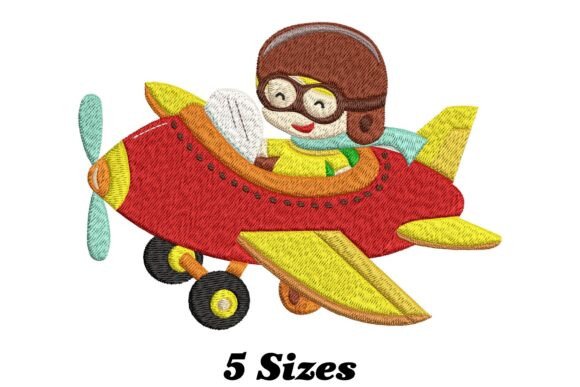
Plane Pilot: A Designer’s Review for Real Embroidery Projects
As an embroidery designer who has spent countless hours digitizing, testing, and stitching out files for clients, I approach every new machine embroidery design with a critical eye. It is not enough for a motif to look cute on a screen; it must hold up under the needle, survive the wash, and appeal to the end buyer. Recently, I evaluated Plane Pilot, a trendy design categorized under Robots, to determine its viability for real-world commercial and personal use. This review breaks down how this cheerful, artistic asset performs when moved from digital preview to physical fabric.
First Impressions and Visual Personality
The first thing that strikes you about Plane Pilot is its approachable charm. While many robot-themed designs lean heavily into sci-fi aesthetics or complex mechanical details, this piece opts for a softer, more whimsical interpretation. The layout suggests a character-driven approach, likely featuring clean lines and balanced proportions that translate well to various hoop sizes. For a designer, this is crucial. A cluttered design often loses definition when scaled down, but Plane Pilot appears to maintain its visual integrity through simplified shapes and clear separation of elements.
The mood is undeniably cheerful. In the current market, where customers are seeking items that evoke nostalgia and joy, this design fits squarely into the "comfort" category. It does not scream for attention with aggressive colors or dense shading; instead, it invites curiosity. This makes it an excellent candidate for products targeting children, parents, or anyone appreciating playful home decor.
Real-World Application: From Mockup to Finished Product
To truly test the versatility of Plane Pilot, I imagined several practical scenarios common in my craft business. The most immediate application that came to mind was a custom embroidered tote bag. Tote bags are staples for Etsy sellers and small shop owners because they offer a large, flat canvas. Here, the design’s artistic touch would shine, especially if stitched with high-contrast thread colors against natural cotton or canvas. The result would be a durable, stylish accessory that appeals to eco-conscious buyers looking for unique, handmade products.
Another strong contender is sweatshirt embroidery. Hoodies and crewnecks require designs that can handle the texture of fleece or heavy cotton blends. Plane Pilot seems robust enough to stand out on these thicker fabrics without getting lost in the pile. For a boutique brand, placing this motif on the left chest or as a larger back print could create a signature look that enhances brand consistency. It feels like a design that could become recognizable if used consistently across a product line.
I also considered its potential for baby embroidery. Parents love personalized gifts, and a friendly robot pilot is gender-neutral and age-appropriate. Stitching this onto a onesie or a burp cloth requires careful attention to stitch density to ensure comfort against sensitive skin. If the digitizing uses appropriate fill stitches and avoids overly dense satin stitch borders, it could be a bestseller during holiday seasons or for baby shower gifts.
Technical Considerations for Stitching Success
While the aesthetic appeal is high, the technical execution determines whether Plane Pilot becomes a favorite file or a frustration. When working with any new embroidery file, I always recommend checking the stitch density. Dense areas can cause puckering, especially on thinner fabrics like t-shirts or kitchen towels. If this design relies heavily on solid fill stitches, using a cut-away stabilizer is non-negotiable for garment stability. For woven items like aprons or pillow covers, a tear-away might suffice, but testing is key.
Fabric texture plays a significant role here. On smooth quilting cotton, the details will pop. However, on textured fabrics like terry cloth towels or fuzzy fleece, fine details may blur. I advise reviewing the design in a black-and-white mockup to see how the contrast holds up without color distraction. If the design includes tiny lettering or intricate corners, these areas need scrutiny. Small details can easily turn into thread nests if the needle penetration is too high or if the fabric shifts.
Curved surfaces present another challenge. If you plan to use Plane Pilot on caps or hats, ensure the design fits within the standard cap hoop dimensions. The curvature of a cap can distort wide designs, so a narrower layout is preferable. Additionally, stretchy fabrics require careful hooping and possibly a water-soluble topping to prevent the stitches from sinking into the material.
Commercial Viability and Buyer Engagement
For Etsy sellers and creative entrepreneurs, the commercial potential of Plane Pilot lies in its versatility. It is not just a robot; it is a narrative element. This allows for creative marketing angles. You could pair it with travel-themed quotes for luggage tags, use it for aviation-loving families, or incorporate it into nursery decor sets. The ability to position it as both a playful toy motif and a stylish graphic increases its market reach.
Customer trust is built on quality. A clean, well-digitized design signals professionalism. If the finished product shows no thread breaks, minimal trimming needs, and crisp edges, buyers are more likely to leave positive reviews and return for future purchases. Plane Pilot has the potential to elevate the perceived value of a simple item, turning a basic t-shirt into a curated piece of wearable art.
Practical Notes for Designers and Makers
- Test on Scrap Fabric: Always stitch a sample on the same type of fabric you intend to use for the final product. This reveals issues with tension, density, and color blending.
- Check Thread Contrast: Experiment with different thread colors. A monochromatic look can be sophisticated, while vibrant contrasts enhance the cheerful vibe.
- Verify Licensing: Before selling finished items or digital products, confirm the license terms associated with the digital embroidery file. Ensure it allows for commercial use if you are running a craft business.
- Stabilizer Selection: Match your stabilizer to the fabric weight. Heavy fabrics may need less support, while light or stretchy materials require robust stabilization to prevent distortion.
- Review Stitch Types: Look for a balance of satin stitch for outlines and fill stitch for larger areas. Running stitch can be useful for lightweight detailing without adding bulk.
In conclusion, Plane Pilot offers a blend of charm and practicality that suits a wide range of embroidery projects. Whether you are creating personalized gifts, expanding your small shop product line, or designing custom apparel, this motif provides a solid foundation for creative expression. By paying attention to technical details and understanding your fabric choices, you can leverage this design to create high-quality, engaging products that resonate with customers. It is a reminder that even in the world of robots and machines, there is room for warmth, character, and artistic flair.